The turntable movement tied to scratching and, more broadly, to hip-hop turntablism goes back to the early '80s. I was lucky enough to live through that period, and it really was a pioneering level. Few of us knew each other, and no shortage of legends made the rounds. I was fortunate enough to become friends with Gruff, who introduced me to that magical world.
We weren't many, but we were bound by motivations as strong as they were varied, and by an extremely combative spirit that developed what we'll from now on call: THE ITALIAN SCHOOL OF TURNTABLISM, and this is its virtual reconstruction.
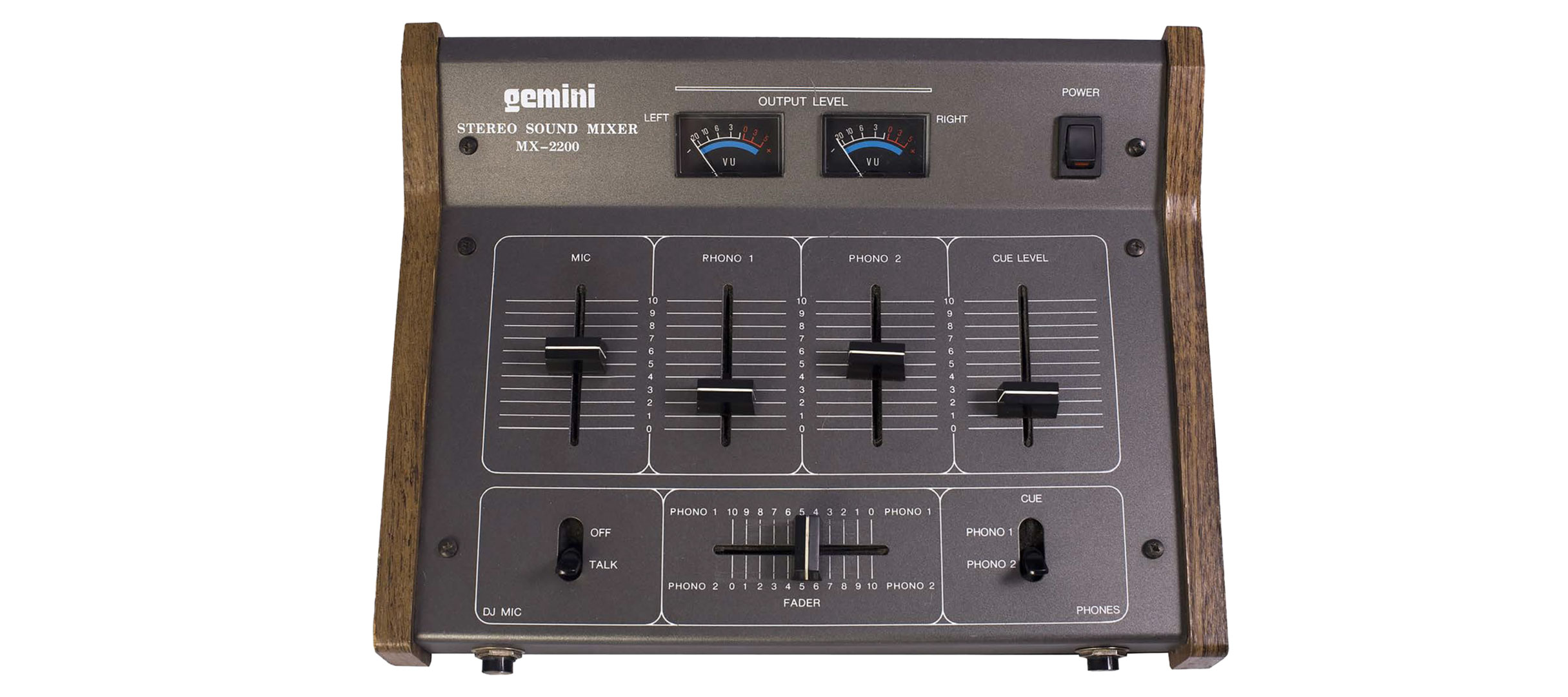
I fondly remember my first meeting with Eolo, a monster on the turntables who scratched with both hands. We met again later at my place in Milan, where he, Gruff and I spent intense days I still hold dear. That mixer, the little Gemini MX 2200 with the wood trim, had a fader that would be considered prehistoric today, but back then it let us express ourselves fully.
Every technique you conquered felt like flying.
Not long after came my first contact with Carrie D: this was around the late '80s, and we met at her place in Turin, where she practiced day and night. There we got to trade techniques, and she showed me her passion for scratching. Besides her I also met Basic Bass, another Turin DJ from that era.
I still carry the indelible memory of a home battle involving the three of us, Gruff and Prezioso, a divisive character but of undoubted talent. It was from him that I first saw the rough shape of a drum pattern, or at least a certain rhythmic quality in scratching.
Of Lory D, known as "the Sacred Mountain," I only knew the legends but was never lucky enough to meet him: I knew he was extremely strong on electro, like all Romans. Cut Master G (or Gemolotto) was another outsider of our movement, like Mondello or the KK crew, and stood out for his undeniable technical cleanliness.
In the years that followed I met Tj Sanders in Rimini, in a lock-up where he used to practice. He was a wonderful person and a hugely talented DJ, just like Master Freeze, who hosted me every summer, setting aside a corner of his home where I could practice on the turntables.
Someone I would have loved to battle back then was Blade from Florence, whom I only actually got to meet fifteen years later: we ran into each other by chance in Australia, where in '96 I won my first team title with "3 Dj's." Even though he'd never seen me before, he recognized the style of my scratching and immediately placed where it came from.
There wasn't much technology for sharing back then: the web didn't exist, and mIRC chat came along much later. Getting to attend a Zulu Nation jam or a gathering was a stroke of luck, because you'd come home richer in experience and with what we later came to call "FOTTA" — Italian slang for that hunger, that fire to keep going.
In the years following the '90s I created the first forum, where we'd meet up in a private chat among DJs to compare notes on customizing our gear. That's where the first mixer and turntable customizations were born: Italy, through Nitro and Gruff, created the BARRA, a genuine, independent product, copied and envied around the world.
Then came the golden years: adjustable-curve faders, the hamster switch, ISPs landing in Italy, skipless break beats, flares — and we were ready for the revolution. The DJ was finally a true one-man band, and started studying music for real, to actually "play" small fragments of groove.
Then, for a moment, turntablism was almost replaced by "controllerism," but its wild nature protected it once again. This is the era of DJ bands, of the DJ speaking to huge crowds: we've arrived at the present day, and we got here prouder than ever.
Scratching, music, the turntable, cutting and turntablism in general have given Italy enormous satisfaction, and all of us should be proud of what we've built and of the piece we've placed on the map of DJing worldwide.